
Lower running costs, discount off the invoice
Energy Efficient Heating and Cooling Upgrades
An efficiency upgrade is only worth doing if the numbers work, so this page is mostly numbers. The short version is that swapping a combustion appliance for a heat pump is the single largest change available to a Victorian household, and the discount structure in this state currently does a lot of the heavy lifting on the up front cost.
- REC 37223
- Melbourne west
- Fixed quotes
The short answer
The Victorian Energy Upgrades program applies its discount directly to the installation invoice rather than as a rebate you claim later, with no income test and a requirement that the property is at least two years old. Replacing ducted gas heating with reverse cycle typically cuts heating from 50 to 72 cents an hour to 28 to 36 cents, saving roughly $200 to $450 a year. VEU carries a minimum customer contribution of $200 including GST, and the program changed on 30 September 2026.

From one of our jobs
Heat pump hot water, swapped in where the old gas unit sat
Photographed on site in Melbourne’s west. REC 37223.
Pivot works across the western suburbs from Altona, and we handle the electrical, refrigeration and paperwork side of these upgrades in house under REC 37223. What we will not do is quote a rebate figure we cannot stand behind, which matters more than usual right now.
How the Victorian Energy Upgrades discount actually works
This is the part people get wrong. VEU is not a rebate you apply for and wait on. The discount is applied by an accredited provider directly to the installation invoice, so the price you are quoted is already net of it. There is no form to lodge afterwards, no waiting period, and no income test.
The eligibility rules that matter are straightforward. The property has to be at least two years old, the equipment has to be on the approved product list, and there is a minimum customer contribution of $200 including GST, so no upgrade under the scheme is ever completely free. The program changed on 30 September 2026, so the amount available shifts. We confirm the current figure in writing at quote time rather than publishing a number here that may already be out of date.
Applied to the invoice
The discount comes off the price. You do not claim it back and you do not wait for a payment.
No income test
Unlike some Solar Homes programs, VEU does not assess household income.
Property age
The building must be at least two years old, so new builds are excluded.
Minimum contribution
$200 including GST is the floor on what a customer pays under the scheme.
Amounts move
Announced changes commence on 30 September 2026. Get the figure confirmed on your quote, not from a website.
The upgrades that move the needle
Not everything sold as an efficiency upgrade earns its keep. In rough order of value for a typical western suburbs home, replacing ducted gas heating with reverse cycle is first, replacing electric resistance hot water with a heat pump is second, and adding zoning or better controls to an existing ducted system is third.
The reason the first two dominate is that they change the physics. A gas heater converts roughly 80 to 92 percent of its fuel into heat and can never do better than the fuel you bought. A reverse cycle system returns 3 to 4 units of heat per unit of electricity because it is moving heat rather than making it. A heat pump hot water system uses roughly a third of the electricity of a conventional electric storage tank for the same hot water.
Where the savings actually come from
Heating a room on reverse cycle costs roughly 28 to 36 cents an hour against 50 to 72 cents an hour for ducted gas. Over a Melbourne winter that difference lands somewhere between $200 and $450 a year for most households, and more for homes that heat a large area for long hours.
The second saving is the one people forget. If gas heating and gas hot water are the only remaining gas appliances, removing both lets you disconnect the gas service entirely and stop paying the daily supply charge, which is a fixed cost you pay whether you burn anything or not. Do the arithmetic on your own bill, because that line is often worth several hundred dollars a year on its own.
The unglamorous upgrades that still pay
Before spending on equipment, it is worth spending on the building. Ceiling insulation that has been disturbed by other trades, duct joints that have separated in the roof space, and duct insulation that has degraded all waste output you have already paid to produce. We find disconnected ducts on a surprising number of homes, often near where a solar or plumbing job happened.
On the controls side, adding zoning to an existing ducted system lets you stop heating and cooling empty bedrooms, and a properly located thermostat stops the system chasing a reading taken next to a sunny window or a heat source. These are small jobs with sensible payback that nobody puts in a brochure.
Getting the electrical side right first
Electrification runs into the switchboard eventually. Older boards in the west often have no spare capacity, no RCD protection on existing circuits, or a main switch and supply that will not comfortably carry a ducted system, a heat pump and an EV charger at once.
We assess the board and the incoming supply as part of any upgrade quote, and where an upgrade is needed it appears as a line item rather than an ugly surprise mid job. If you are planning several changes over a couple of years, it is worth doing the board once, properly, at the start.
A sensible upgrade sequence for a gas connected home
- 1Check switchboard capacity and RCD protection before committing to new appliances
- 2Fix ceiling insulation, duct leaks and duct insulation while the roof is accessible
- 3Replace ducted gas heating with reverse cycle, with VEU discount applied to the invoice
- 4Replace gas or electric resistance hot water with a heat pump system
- 5Add zoning or better controls so you only condition rooms in use
- 6Disconnect the gas service once the last gas appliance is gone, and drop the supply charge
- 7Reassess solar sizing once the household load has shifted to electricity
On the job
Energy Efficient Upgrades in Melbourne's west
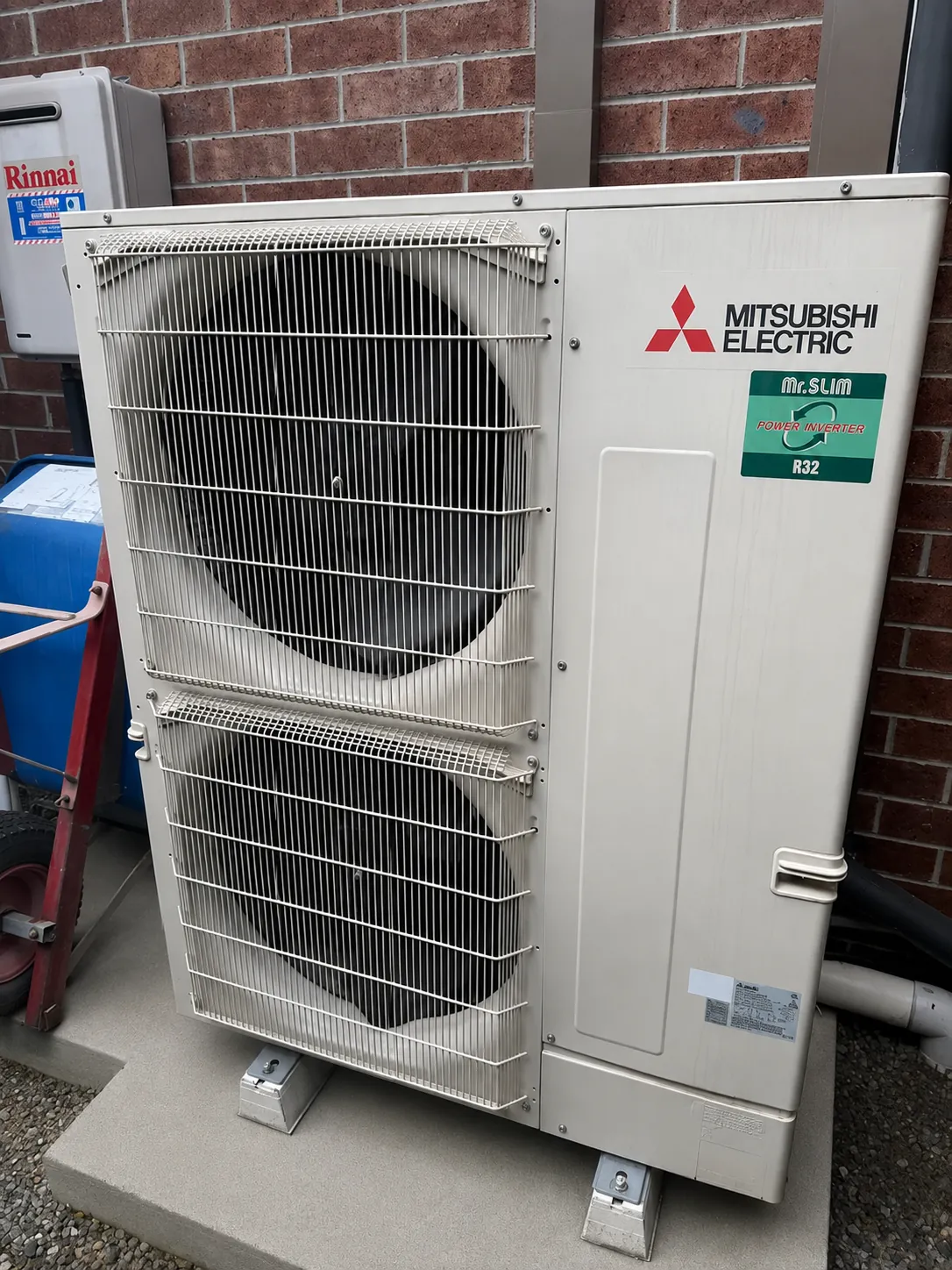
New outdoor split ducted unit replacing an old gas heater 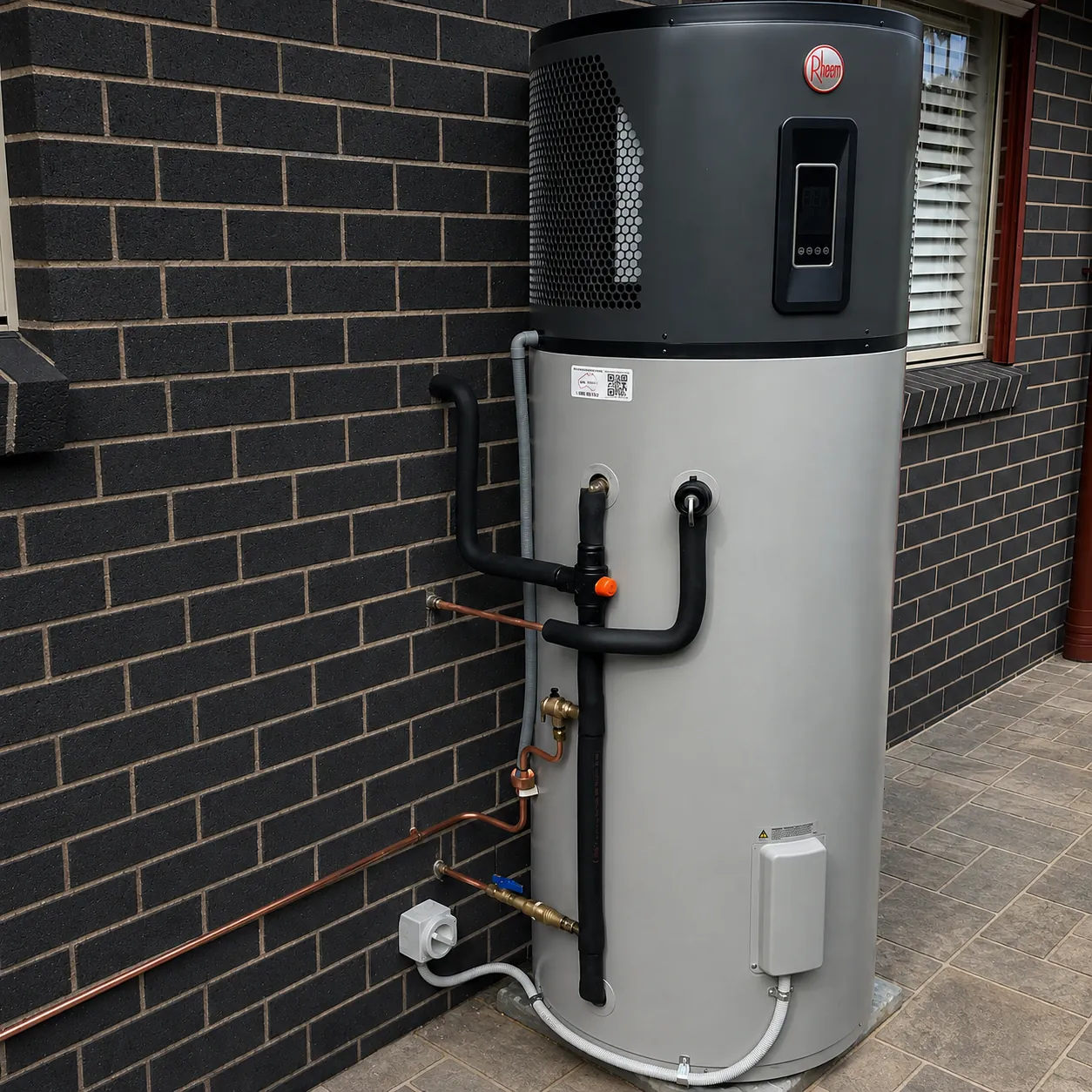
New electric heat pump replacing an old, expensive gas hot water unit
Licensed and accredited work by a local team. Read about Pivot Trade Services or see recent jobs across the western suburbs.
Answers
Frequently asked questions
No. The discount is applied directly to your installation invoice by an accredited provider, so the quoted price already includes it. There is no claim, no form and no waiting on a payment. The only cost rule to be aware of is the minimum customer contribution of $200 including GST.
No. Victorian Energy Upgrades has no income test. That is different from the Solar Homes program, which does have a combined household income cap of $150,000 from 1 July 2026. The two can apply to different parts of the same project, which is why we work through eligibility item by item.
Not under VEU, because the property must be at least two years old. That rule exists to stop the scheme subsidising equipment in new builds. If you are inside that window, we will quote the work at normal price and you can revisit eligibility once the property passes two years.
For a typical household replacing ducted gas heating with reverse cycle, roughly $200 to $450 a year on heating, before counting the gas supply charge if you can disconnect entirely. Large homes with long heating hours save more. We work the estimate off your own bill rather than an average, because usage varies enormously between households.
Announced changes commence on 30 September 2026, and beyond a dated announcement neither we nor anyone else can tell you which way an amount will move. What we can do is put the current confirmed figure on your quote with a validity period so you are deciding on real numbers. Waiting through a winter on an expensive gas system has a cost of its own.
Yes. We work with accredited providers and handle the documentation for the upgrades we install, including the compliance evidence required. You sign what you need to sign and we take care of the rest, and everything electrical is certified under REC 37223 with a Certificate of Electrical Safety.
Book energy efficient upgrades
Tell us what you need and we will give you a written price, not a range that moves on the day.
- Free
- On-site quotes
- Fixed
- Written pricing
- 100%
- Workmanship guarantee
- 5.0★
- 73 Google reviews