
When a simple element tank is still the right call
Electric Water Heater Installation and Replacement
Conventional electric hot water is the simplest water heating there is. An insulated tank, one or two elements, a thermostat and a valve. It is cheap to buy, quick to replace, quiet, and it fits places a heat pump cannot go. It is also the most expensive way to make hot water with electricity, which is the trade off this page is about.
- REC 37223
- Melbourne west
- Fixed quotes
The short answer
An electric storage water heater uses a resistance element and consumes roughly three times the electricity of a heat pump for the same hot water, so a heat pump is the better long term choice in most homes. Electric storage still suits apartments and units with no external space, properties where noise or placement rules out a heat pump, and emergency replacements where hot water is needed the same day. Installation requires a licensed electrician and a Certificate of Electrical Safety.
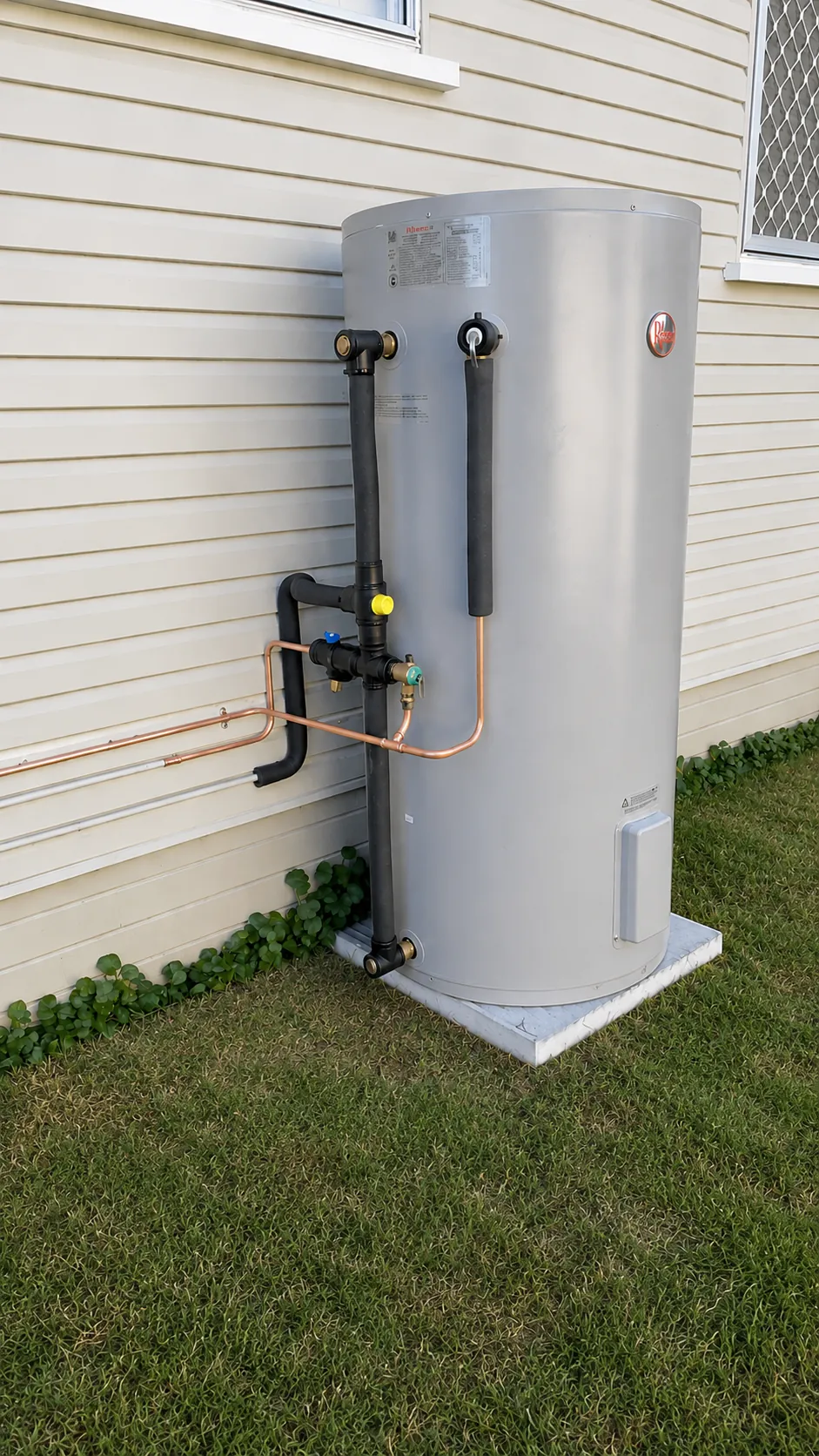
From one of our jobs
A Rheem electric storage unit, replaced and re-plumbed
Photographed on site in Melbourne’s west. REC 37223.
We install, replace and repair electric storage and instantaneous units across Altona, Werribee, Footscray, Sunshine and the rest of the west, and we will tell you when a heat pump is the better spend instead.
When a resistance tank is still the right answer
There are legitimate cases. Apartments and units with no external wall, courtyard or service area cannot physically take a heat pump, since it needs airflow and produces noise and condensate. Some owners corporations will not approve an external unit. Internal cupboard installations and roof space tanks are the same story.
The other case is timing. When a tank fails on a Friday and there are three people in the house, a same day electric storage replacement is a reasonable decision. We will still tell you what the heat pump comparison looks like, but nobody should be pressured into a bigger decision while showering at a neighbour house.
Apartments and units
No external space, no airflow, or an owners corporation that will not approve an outdoor unit.
Internal installations
Cupboard, laundry or roof space tanks where a heat pump cannot be sited or serviced.
Emergency replacement
A failed tank where hot water is needed today and the household cannot wait on a longer install.
Very low usage
Holiday properties or single occupant units where the running cost difference is small in dollars.
Storage or instantaneous
Electric storage holds a tank of heated water and reheats it as it is used. Sizing matters because when the tank is empty you wait, and it is why undersized tanks generate complaints and correctly sized ones are invisible. As a guide, 125 to 160 litres suits one or two people, 250 litres suits three or four, and 315 litres or larger suits five or more.
Electric instantaneous heats water on demand with no tank, which suits a single outlet or a small flat, but the electrical load is very high. Whole of house electric instantaneous is generally impractical in domestic supplies because of the current it draws, and the switchboard and supply usually rule it out. We check the supply before recommending it at all.
Tariffs, timers and solar
Traditionally electric tanks were wired to a controlled load tariff that heats overnight at a lower rate. That still works, but for a household with solar it is often no longer the best arrangement, because energy exported during the day earns very little while the overnight electricity is bought at whatever the controlled rate happens to be.
Switching the tank to heat during the middle of the day lets it soak up your own generation instead. Whether that is worth doing depends on your tariff, your export rate and how much surplus your system actually produces. It is a wiring and metering change, so it needs an electrician, and it is worth modelling on your own bill before committing.
Safety components that are not optional
A tempering valve limits the temperature delivered to bathroom outlets, which is a scald protection requirement and is particularly relevant with children or elderly residents in the house. Tanks are stored at a higher temperature than that for hygiene reasons, so the valve is what makes the two compatible.
The pressure and temperature relief valve is the other one. It should be discharged briefly every six months and replaced when it weeps or fails to reseat. A relief valve that has been left to corrode shut is a genuine hazard, not a maintenance nicety. Electrically, the tank needs its own circuit and isolation, and any work we do is certified with a Certificate of Electrical Safety.
Repair, replacement and getting more life out of a tank
Elements and thermostats are routine replacements and worth doing on a tank under about eight years old. A leaking tank is not repairable, because the leak means the cylinder itself has corroded through, and at that point replacement is the only option.
The maintenance item that genuinely extends life is the sacrificial anode. It corrodes so the tank does not, and replacing it at around five years can add years to the cylinder. Most people have never heard of it and most tanks never get it changed, which is a reasonable part of why they fail when they do.
Warning signs your electric hot water tank is near the end
- 1Rusty or discoloured hot water at the tap
- 2Water pooling under or around the base of the tank
- 3Hot water running out much sooner than it used to
- 4The relief valve dripping continuously rather than briefly after heating
- 5Banging or rumbling from the tank as it heats, indicating sediment build up
- 6A circuit breaker that trips when the element switches on
- 7A tank more than twelve years old with no service history
On the job
Electric Water Heaters in Melbourne's west
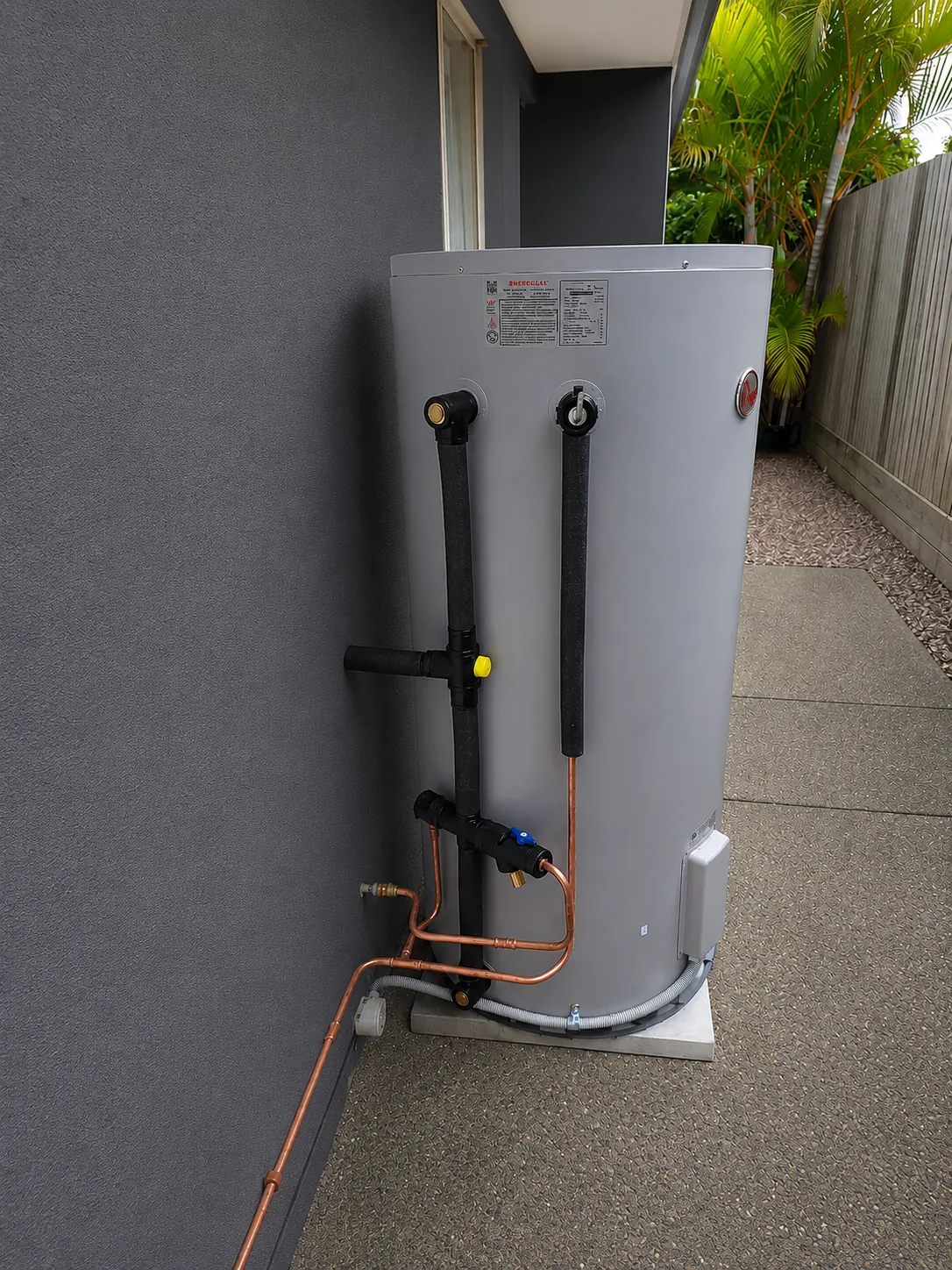
An electric water heater swapped over down the side of the house
Licensed and accredited work by a local team. Read about Pivot Trade Services or see recent jobs across the western suburbs.
Answers
Frequently asked questions
Only if a heat pump genuinely will not fit or suit. A heat pump uses roughly one third of the electricity for the same hot water, and after Solar Homes, the VEU invoice discount and STCs most Victorian households pay from a few hundred dollars up to about $1,500 for one. Like for like is the right call for apartments, awkward internal installs and true emergencies.
Household size and shower habits drive it, not floor area. Roughly, 125 to 160 litres for one or two people, 250 litres for three or four, 315 litres and up for five or more. Long showers, a spa bath or a laundry running hot cycles push you up a size. Undersizing shows up as cold showers on weekday mornings.
A straightforward like for like swap is usually half a day, including draining the old unit, removing it, setting the new tank, plumbing, electrical connection and testing. Moving the tank to a different location, upgrading the circuit or changing tank size adds time. We aim to leave you with hot water the same day.
It can be, but it is no longer automatic. Controlled load tariffs buy overnight electricity at a lower rate, while a household with solar can heat during the day on generation that would otherwise export for very little. The right answer depends on your tariff and your solar output, and it is worth checking against your actual bill rather than assuming.
Commonly a failed lower element, so only the top of the tank is heating, or heavy sediment reducing effective capacity. Both are diagnosable in one visit. On an older tank, a thermostat drifting low does the same thing. If the tank is also weeping anywhere, replacement rather than repair is the honest recommendation.
Both trades touch a hot water changeover. The water connections are plumbing work and the circuit, isolation and certification are electrical work requiring a licensed electrician who issues a Certificate of Electrical Safety. Pivot handles the electrical side under REC 37223 and coordinates the rest so you are not managing two bookings.
Book electric water heaters
Tell us what you need and we will give you a written price, not a range that moves on the day.
- Free
- On-site quotes
- Fixed
- Written pricing
- 100%
- Workmanship guarantee
- 5.0★
- 73 Google reviews